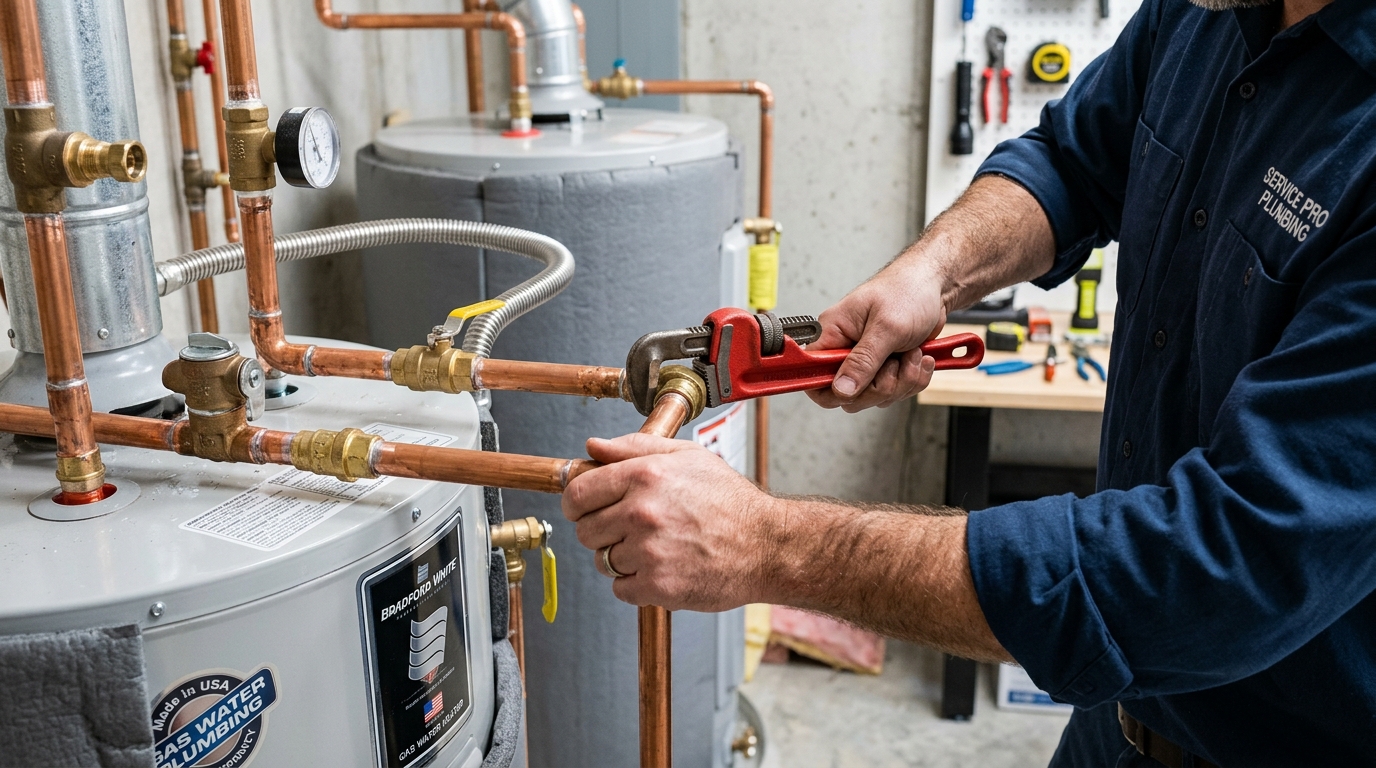
Water Heater Maintenance: 7 Tips to Extend Its Life
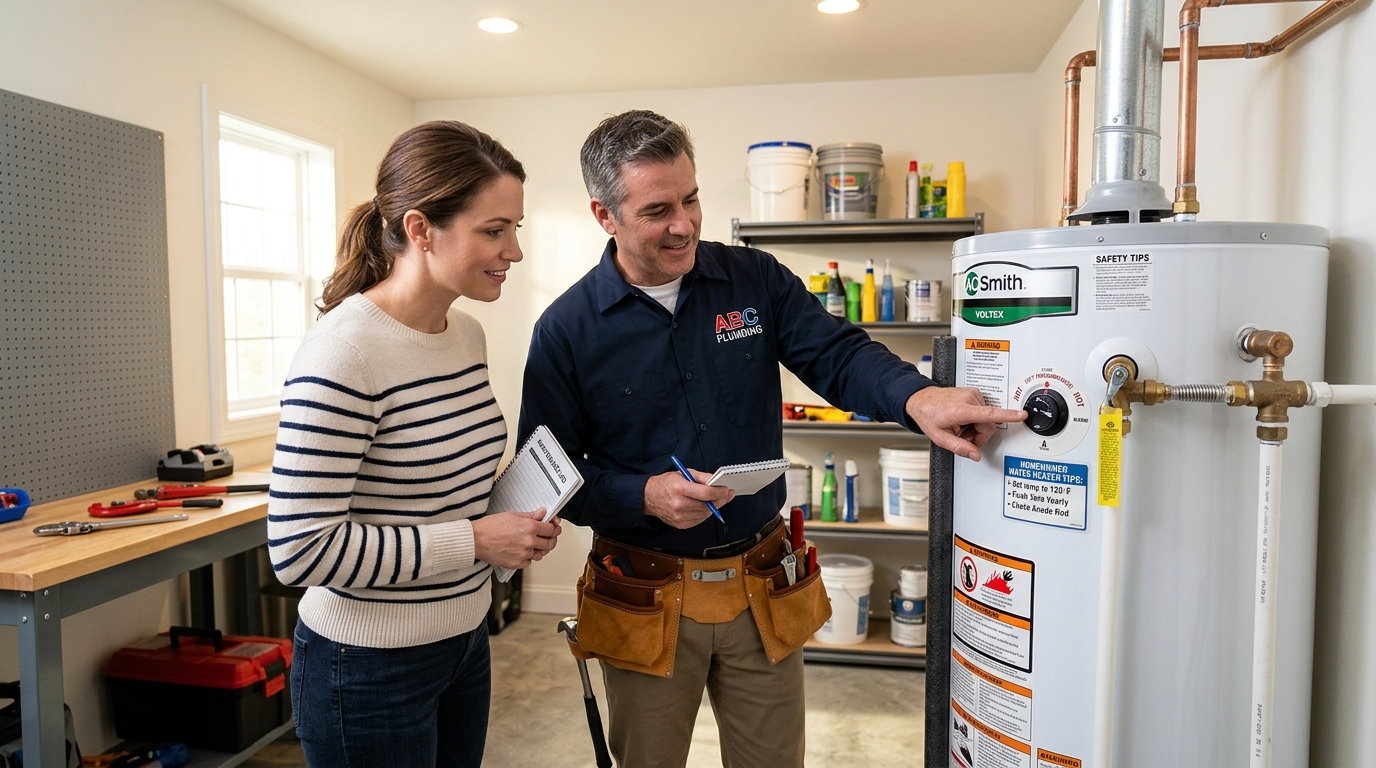
Why Water Heater Maintenance Matters
Your water heater is one of the hardest-working appliances in your home, running **365 days a year** to deliver hot water for showers, dishes, and laundry. Yet most homeowners in **Orange County and San Diego County** never perform routine maintenance — and that neglect shortens the unit's lifespan by **2 to 5 years** on average.
A well-maintained water heater runs more efficiently, costs less to operate, and is far less likely to fail unexpectedly. The water heater maintenance tips below take minimal time and can save you **hundreds to thousands of dollars** in emergency repairs and premature replacement.
1. Flush the Tank Every 6 to 12 Months
Sediment from dissolved minerals — especially calcium and magnesium — accumulates at the bottom of your tank over time. **Southern California has notoriously hard water**, with mineral content ranging from 15 to 25 grains per gallon in many areas. This sediment insulates the tank floor from the burner, forcing your water heater to work harder and longer to heat the same amount of water.
How to flush your water heater: 1. Turn off the gas valve or flip the breaker for your water heater 2. Connect a standard garden hose to the drain valve at the bottom of the tank 3. Run the hose to a floor drain, driveway, or bucket 4. Open the drain valve and let water flow until it runs clear (typically 5 to 10 minutes) 5. Close the valve, disconnect the hose, and restore power
If you are not comfortable doing this yourself, schedule a professional water heater maintenance visit. Our technicians in **Anaheim, Irvine, and Carlsbad** perform this service routinely.
2. Test the Temperature and Pressure Relief Valve
The **T&P (temperature and pressure) relief valve** is the most critical safety component on your water heater. It opens automatically if the tank exceeds **150 PSI** or **210°F**, releasing pressure to prevent a dangerous rupture.
How to test it: 1. Place a bucket under the discharge tube connected to the T&P valve 2. Lift the valve lever briefly — you should hear a rush of water into the bucket 3. Release the lever — it should snap back and the water should stop
If the valve does not release water, continues to drip after you release it, or shows signs of corrosion, it needs immediate replacement. A failed T&P valve is a serious safety hazard.
3. Inspect and Replace the Anode Rod
The anode rod is a **sacrificial metal rod** (usually magnesium or aluminum) inserted into the top of your tank. Its job is to attract corrosive minerals so they attack the rod instead of the tank walls. Once the rod is depleted, corrosion targets the tank itself — and once tank corrosion starts, replacement is the only option.
When to check: Every 2 to 3 years, or annually if you have a water softener (softened water is more corrosive to anode rods).
Signs the rod needs replacement: - Less than 1/2 inch thick (original diameter is about 3/4 inch) - Coated with heavy calcium deposits - Wire core is exposed
Anode rod inspection requires removing the rod from the top of the tank with a **1-1/16 inch socket**. This is typically a job for a professional technician.
4. Insulate the Tank and Pipes
Adding an **insulation blanket** (R-8 or higher) to your water heater tank can reduce standby heat loss by **25 to 45%**, according to the Department of Energy. This is especially impactful for units in unheated spaces like garages — which is where most water heaters sit in Southern California homes.
Also insulate the **first 6 feet of hot and cold water pipes** connected to your water heater using foam pipe insulation. This reduces heat loss in the pipes and delivers hotter water to your faucets faster.
Cost: Insulation blankets run $20 to $35 at any home improvement store. Pipe insulation costs about $1 per foot. Total investment under $50 for meaningful energy savings.
5. Set the Thermostat to 120°F
Most water heaters ship from the factory set to **140°F**, but the **U.S. Department of Energy recommends 120°F** for most households. Lowering the temperature by 20 degrees:
- Reduces energy consumption by **6 to 10%**
- Significantly lowers the risk of **scalding** (especially important for homes with children or elderly residents)
- Slows mineral buildup and corrosion inside the tank
How to adjust: The thermostat dial is behind a small access panel on the front of gas water heaters or behind a panel secured by screws on electric models. Turn to 120°F and wait 24 hours before testing the hot water temperature at the nearest faucet with a thermometer.
6. Check for Leaks and Corrosion Regularly
A quick **visual inspection every 3 months** can catch problems before they become emergencies. Look for:
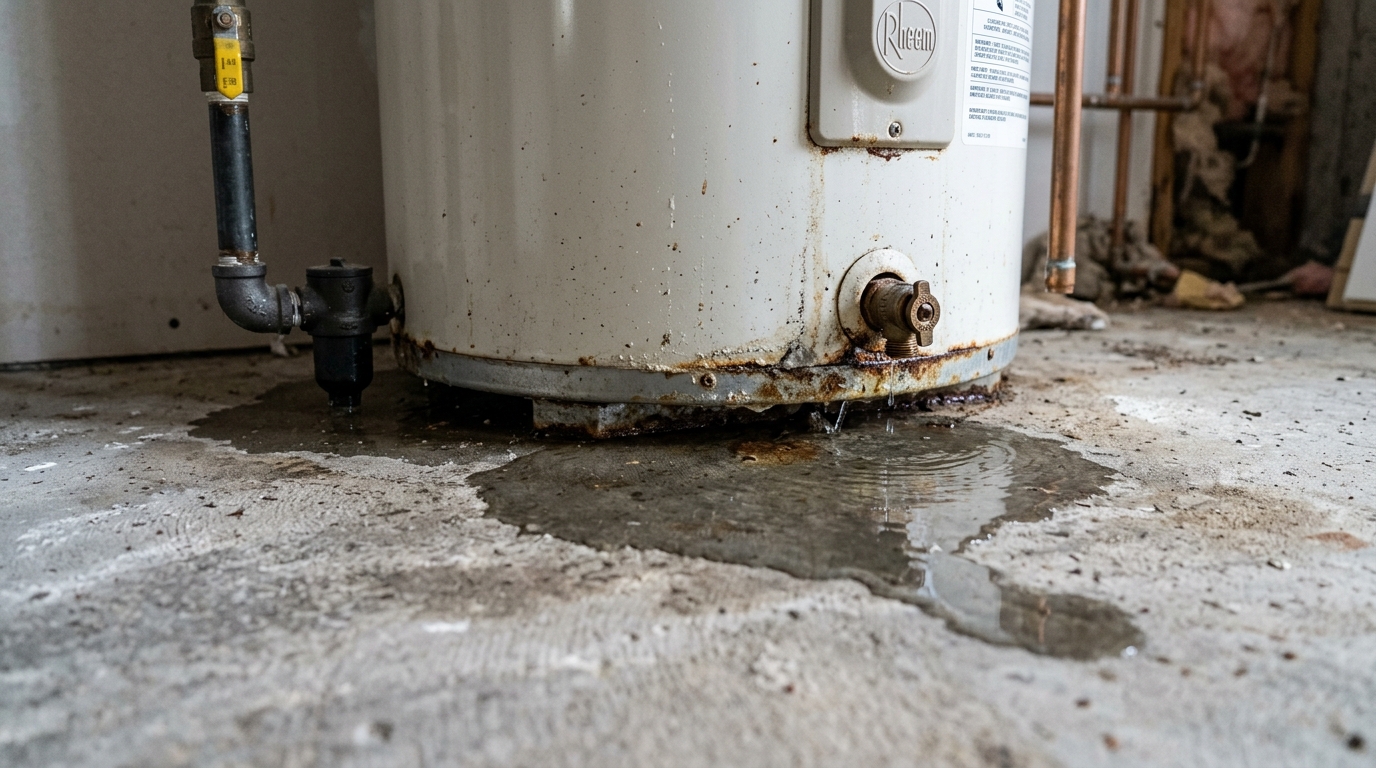
- **Water pooling** around the base of the unit
- **Rust or corrosion** on fittings, connections, or the tank itself
- **Green or white mineral deposits** on pipe connections
- **Moisture or dampness** on the floor near the water heater
Catching a small drip early can prevent a full tank failure that floods your garage or utility room.
7. Schedule Annual Professional Water Heater Maintenance
Even if you perform the DIY tasks above, an **annual professional inspection** catches issues that are difficult to spot without training and tools. A licensed technician will:
- Flush the tank and remove sediment
- Test the T&P valve and gas connections
- Inspect the anode rod condition
- Check the burner assembly or heating elements
- Verify the thermostat accuracy
- Inspect the flue and venting (gas units)
- Test for carbon monoxide leaks (gas units)
Professional maintenance typically costs **$80 to $150** and can extend your water heater's lifespan by years.
Water Heater Maintenance Schedule at a Glance
Schedule Water Heater Maintenance in Orange County or San Diego
**Water Heaters Any Time** offers comprehensive water heater maintenance services throughout **Orange County and San Diego County**. Whether you need a simple tank flush or a full annual inspection, our licensed technicians arrive on time, explain everything clearly, and provide upfront pricing.
Regular maintenance is the most cost-effective way to avoid emergency water heater repair and premature replacement. Call **(888) 888-8888** today to schedule your maintenance visit.
More Articles
When to Replace Your Water Heater: 7 Warning Signs
How long do water heaters last? Learn the 7 water heater replacement signs Orange County and San Diego homeowners should never ignore. Call (888) 888-8888.
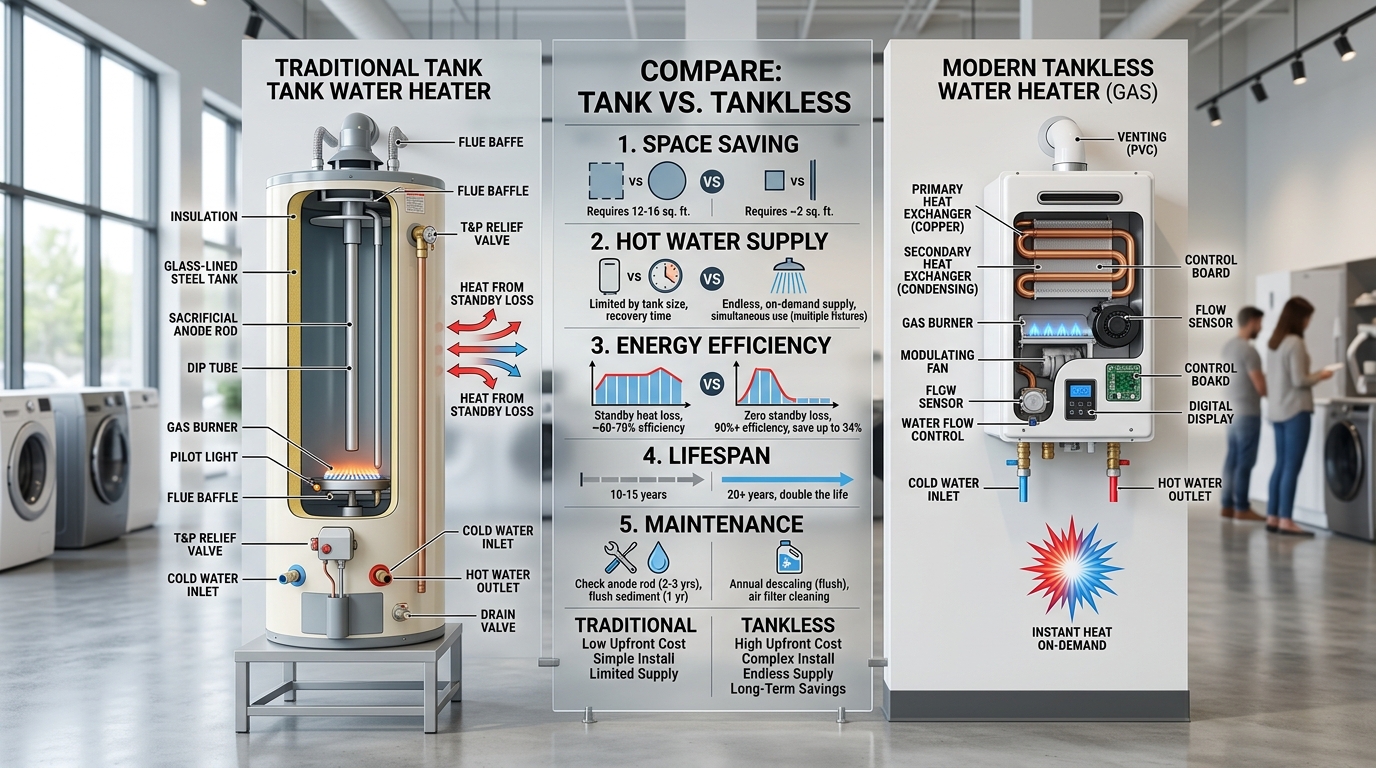
Tank vs Tankless Water Heater: Which Is Best?
Compare tank vs tankless water heater pros and cons, costs, and lifespans. Find the best water heater type for your Orange County or San Diego home.
Water Heater Leaking? Emergency Steps to Take Now
Water heater leaking or failing? Follow this emergency guide to stay safe and prevent damage. 24/7 emergency water heater repair in Orange County and San Diego.

How Can We Help?
From cold showers to complete system failures, Water Heaters Any Time is your trusted water heater expert across Southern California. Our experienced specialists provide dependable repair, replacement, and installation services designed around your home and your budget. When hot water matters, you can rely on us to get it right.